Are Neon Signs Still Made By Traditional Craftspeople Today?
Despite technological advancements, some neon signs are still made by hand today. Specialist studios still bend glass tubing, fill it with gas, and wire it into glowing signs, just as makers did a century ago. What has changed is the market around them. In this guide, we explain who still makes real neon, how it differs from LED, and how to buy the right sign.

Key Takeaways
- Traditional glass neon signs are still made by specialist craftsmen, and you can still commission new pieces rather than only buying vintage ones.
- Many products sold online as neon are in fact LED flex, so checking the construction in the product specifications matters before buying.
- Neon making appears on the UK red list of endangered crafts because fewer people are learning the skill, not because production has stopped.
- High-quality custom LED neon signs capture the classic glow in a lighter, safer, and more affordable format.
Table of contents
-
Are Neon Signs Still Made?
-
What Is The Difference Between Glass Neon And LED Neon?
-
How Are Custom Neon Signs Made?
-
Where Can I Get Real Neon Signs?
-
Where Can I Get Custom Neon Signs?
-
Why Did Neon Signs Become Less Popular?
-
Why Are Real Neon Signs Making A Comeback In Modern Design?
-
Why Is Traditional Neon Making An Endangered Craft?
Are Neon Signs Still Made?
Traditional glass neon signs are still made in workshops around the world. Skilled benders heat glass tubes over a flame, shape them by hand, and fill them with gas. You can still commission a brand new neon sign, from a bar logo to a gallery piece, rather than only restoring old ones or hunting for vintage stock.
What makes the picture confusing is the word itself. Today, “neon” often describes a look, not a technology. Many signs sold as neon use LEDs inside a soft silicone tube. Both exist side by side. Authentic gas-filled glass neon continues as a specialist craft, while LED versions cover most of everyday decor and business signage.
What Is The Difference Between Glass Neon And LED Neon?
Glass neon uses sealed tubes filled with gas, which glows when high voltage passes through it. LED neon uses small diodes inside a flexible diffuser that spreads the light into a smooth line. The two can look similar from across a room, but they differ in materials, weight, power needs, repairability, and typical cost.
Glass neon is heavier and more fragile, and it needs a transformer that steps voltage up to several thousand volts. LED neon runs on low-voltage power, weighs less, and stays cool to the touch. Glass gives a richer, all-around glow, while LED tends to cost less and ship more easily. For a full breakdown, see our guide on LED neon vs glass neon lights.
Color works differently too. In glass neon, the gas, glass, and coatings decide the shade. In LED neon, the diode and diffuser do that job. Lifespan depends on construction and conditions. A well-made glass sign can glow for many years with servicing, while LED signs usually need less ongoing maintenance.
| Feature | Glass Neon | LED Neon |
|---|---|---|
| Light source | Gas-filled glass tubes | LEDs inside a silicone or plastic diffuser |
| Weight | Heavier | Lightweight |
| Power | High voltage via transformer | Low voltage via adapter |
| Repair | Specialist glass and gas work | Section or driver replacement |
| Typical cost | Higher | Lower |
Why Are Many Online Neon Signs Actually LED Flex?
Most online "neon" is LED flex because it is easier to make, ship, and install. The LEDs sit inside a flexible silicone or plastic diffuser that hides the individual dots and creates a continuous line of light. Retailers often use "neon" to describe the visual style, so the name alone will not tell you what is inside.
To check, read the product specifications rather than the title. Look for phrases like "glass tubing," "gas-filled," or "hand-bent glass" for real neon. Terms such as "LED," "flex," "silicone," "12V," or "acrylic backboard" point to LED construction. Our custom neon flex signs state this openly. If a listing does not say, ask the seller directly before you order.
Want the neon look without the fragile glass?
Our LED neon signs give you the same warm glow in a lightweight, shatter-resistant build made to your design.
How Are Custom Neon Signs Made?
Every custom sign starts with an approved design. The maker then fabricates the light sections, assembles them, connects the power, and tests the finished piece. For traditional glass neon, this takes specialist equipment and years of manual practice. For LED neon, the flexible tubing is cut, shaped, and fixed to a backing board.
Design complexity changes everything. Tight curves, small lettering, and several colors add more sections, more joins, and more time. Size matters too. A larger sign means longer tube runs and heavier mounting. Our guide on how to make glass neon signs walks through the traditional process in more depth.
How Do Artisans Bend And Fill Glass Neon Tubes?
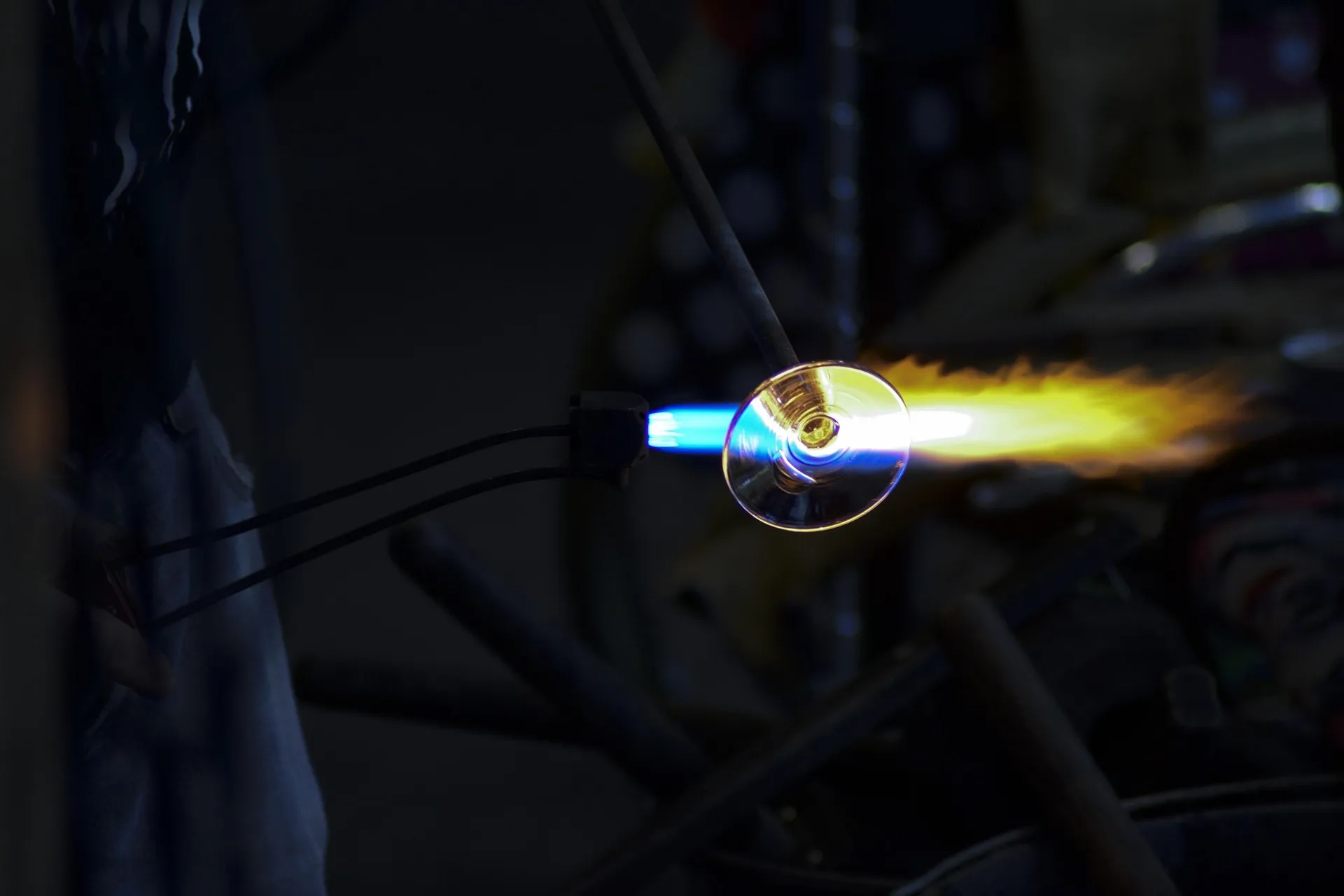
Makers heat glass tubing over ribbon burners and gas torches, then bend it against a full-size reverse pattern of the design. They blow gently through a hose to keep the tube round while it softens. Each letter or shape becomes a separate unit, so careful planning keeps the joins hidden.
Next, electrodes are fused to each end. The tube is pumped down to a vacuum and heated to drive out impurities, a step often called bombarding. It is then filled with neon or argon and sealed. Different gases, glass colors, and phosphor coatings create different shades. Finally, sections are mounted, wired to a transformer, and tested.
Ready to design your own glowing sign?
Choose your text, font, color, and size, and our team will help with proofs before production begins.
Start hereWhere Can I Get Real Neon Signs?
You can get real glass neon from specialist neon studios, established signmakers with in-house benders, and some art and restoration workshops. Start by looking at workshop photographs and recent projects. A genuine maker usually shows bending tables, burners, and finished tubes, and describes glass-and-gas construction in clear terms. Local makers are often easier to visit in person.
Check the practical side as well. Ask about delivery areas, installation support, warranties, and whether the studio can repair the sign later. A supplier that mainly sells LED products may still use the word neon, so confirm the construction in writing. If a sign is listed as custom real neon signs, the specifications should say exactly what it is.
What Should You Check When Buying Authentic Neon Signs?
First, confirm the construction. Ask whether the sign uses gas-filled glass tubes or LED flex, and get the answer in the quote. Then review the supplier's portfolio, materials, mounting method, and electrical specifications, including the transformer type and the power supply your location needs. A good maker will explain each item without hesitation. Use this quick checklist:
- Construction: gas-filled glass tubes or LED flex, confirmed in writing.
- Portfolio: recent photos of finished glass work, not stock images.
- Electrical specs: transformer type, input voltage, and power draw.
- Mounting: standoffs, frames, or backboards included in the price.
- Aftercare: warranty length and who handles future repairs.
When comparing prices, match the quotes like for like. Use the same dimensions, design complexity, and included services, such as backing, mounting hardware, and installation. Finally, ask who handles servicing and future repairs. Glass neon can last for decades, but only if someone nearby can fix a cracked tube or a tired transformer.
Where Can I Get Custom Neon Signs?
You can commission custom neon for lettering, logos, artwork, or reproductions of classic signs. Specialist makers will ask for a few details before quoting: your design or logo file, preferred dimensions, colors, where the sign will hang, and whether it will be used indoors or outdoors. Clear inputs lead to a more accurate quote.
This is also the point to choose between glass and LED. Glass suits heritage projects and art pieces where authenticity matters. LED suits homes, events, and busy businesses that want a lighter, lower-maintenance sign. Expect artwork approval before production, then lead times, installation requirements, and after-sales support that vary by maker.
What Installation, Repair And Restoration Services Do Neon Specialists Offer?
Many neon specialists offer mounting and professional installation, especially for glass signs that need a transformer placed and wired safely. Some also provide ongoing servicing, such as replacing a failed transformer, refilling gas, or rebending a cracked section of tubing. Ask for examples of past installs so you can judge the finish before you commit.
Restoration is a growing service for vintage signs. If you already own an older piece, ask whether the studio can work on existing installations, and whether that work happens in-house or is outsourced. You can read more about repair options in our guide on whether neon signs can be repaired.
Prefer a sign that won't need a specialist repair?
Our LED neon runs on low voltage and stays cool, so it is simple to hang and easy to live with.
Why Did Neon Signs Become Less Popular?
Neon became less common as alternative signage technologies arrived. Backlit plastic boxes, printed vinyl, and later LED signs offered cheaper and simpler ways to light up a storefront. At the same time, glass neon costs more to fabricate, needs careful handling, and depends on specialists for installation and maintenance. Over time, these costs added up for buyers.
That decline was not the same everywhere. Some markets, such as hospitality districts and historic main streets, kept neon alive, while standard commercial signage moved on faster. It is also important to separate reduced mainstream use from the idea that production stopped. It never did. It simply became a smaller, more specialist trade.
What Factors Made Traditional Neon Less Common?
The biggest factors were practical. Glass neon needs a skilled bender, a gas-filling setup, and a high-voltage transformer. Tubes can break in transit or during installation. For a chain store ordering hundreds of identical signs, cheaper, sturdier alternatives made more sense on cost and logistics. Shipping glass signs across long distances added risk. In short, buyers faced:
- Higher fabrication costs than plastic or LED signs.
- Fragile glass that can break in transit or installation.
- High-voltage transformers that need specialist wiring.
- Fewer local repairers as workshops closed.
Maintenance played a role too. When a tube cracked or a transformer failed, owners needed a local specialist, and those became harder to find. Sourcing parts and training new benders grew more difficult as demand fell. Together, these pressures made traditional neon less common for standard commercial signage.
Bring the glow of classic neon to your space
Tell us your idea and we'll turn it into a custom LED neon sign with fast turnaround and competitive pricing.
Start hereWhy Are Real Neon Signs Making A Comeback In Modern Design?
Designers are drawn back to neon's visual character. Real glass gives a soft, even glow from every angle, plus a slight hum and warmth that many people find hard to copy. There is also renewed respect for handmade craftsmanship in a world full of mass-produced décor. It feels personal and imperfect in a good way.
You see it in interiors, hospitality spaces, artwork, boutique storefronts, and distinctive branding. When a project specifically wants traditional neon, authenticity becomes part of the story. That said, this is design interest rather than proof of a large measurable market resurgence, and LED still covers most everyday demand. Social media has helped by putting glowing signs in front of more eyes.
Which Niche Uses Keep Traditional Neon In Demand?
Art installations remain a strong outlet, since artists often want glass for its depth and glow. Historic sign restoration keeps benders busy too. The Neon Museum in Las Vegas is a well-known example of how classic signs are preserved and relit.
Film and theater props, plus boutique storefronts chasing a period look, add steady commissions. These uses value authenticity or a specific visual effect over price. Even when most buyers choose LED, these specialist commissions help keep skilled makers working and passing on what they know.
Why Is Traditional Neon Making An Endangered Craft?
In the UK, neon making appears on the Heritage Crafts Red List of Endangered Crafts. That status is about the future of the skill, not a sign that production has ended. It flags that too few people are learning the craft to keep it healthy for the next generation. It is a call to action, not an obituary.
Becoming a confident bender takes years of practice, and formal training routes are scarce. As mainstream demand fell, fewer workshops could afford to take on trainees. Note that this is a UK classification. It does not describe the whole global neon industry, which varies widely from country to country. Many benders today learned informally from a mentor.
What Could Support The Future Of Traditional Neon Making?
Specialist commissions and restoration work give makers a reason to keep their benches running. Craft education matters too, from short courses to apprenticeships that let new benders build real skill under an experienced eye.
LED alternatives will keep their place alongside glass, and that is fine. Informed buyers can help by choosing glass when authenticity truly matters and by supporting viable workshops. These are possible paths, not predictions. Learning about the neon element and its history is a good place to start. Every thoughtful purchase helps.

Frequently Asked Questions About Are Neon Signs Still Made
Are Neon Signs Still Made Today?
Yes. Glass neon signs are still made today by specialist craftspeople who bend and fill tubes by hand. You can commission new work, not just buy vintage. Alongside them, LED neon now covers most décor and business signage, so always check which type a seller is offering. Ask for the construction details in writing.
How Do Glass Neon And LED Neon Differ?
Glass neon uses gas-filled tubes powered by a high-voltage transformer, giving a rich, even glow but more weight and fragility. LED neon uses diodes inside a flexible diffuser on low voltage, so it is lighter, cooler, and usually cheaper, with simpler maintenance.