How To Make Glass Neon Signs: A Step-By-Step Guide To The Traditional Craft
Learning how to make pixable glass neon signs reveals why traditional neon is a specialist craft rather than a simple DIY project. The process combines full-size pattern design, hot-glass bending, electrode attachment, vacuum processing, controlled gas filling, sealing, mounting, wiring, and testing. This guide explains the workflow at a practical, non-operational level and shows where modern LED neon differs.
Key Takeaways
- Traditional glass neon is handmade from hollow glass tubing. The craft includes full-size pattern design, heating and bending glass, and electrode attachment, vacuum processing, gas filling, sealing, mounting, wiring, and testing.
- Glass neon production is difficult because mistakes in bends, seals, cleanliness, gas processing, or electrical setup can affect the entire finished tube. Consistent work requires training and controlled workshop conditions.
- Some traditional argon-based neon systems may use mercury to produce ultraviolet energy for phosphor-coated colors. Mercury is hazardous and should only be handled and disposed of through appropriate professional procedures.
- If your goal is a custom illuminated sign rather than learning glass fabrication itself, modern LED neon provides a lower-complexity alternative using flexible tubing and low-voltage electronics.
Table of contents
-
How To Make Glass Neon Signs?
-
Why Is Traditional Glass Neon Sign Making So Challenging?
-
What Equipment And Materials Are Needed To Make Glass Neon Signs?
-
How Do You Design And Bend Glass For A Neon Sign?
-
How Are Glass Neon Tubes Prepared Before Gas Filling?
-
How Are Neon Tubes Evacuated, Filled, And Sealed?
-
How Are Finished Glass Neon Signs Assembled And Wired?
-
How Much Does It Cost To Make A Glass Neon Sign?
How To Make Glass Neon Signs?
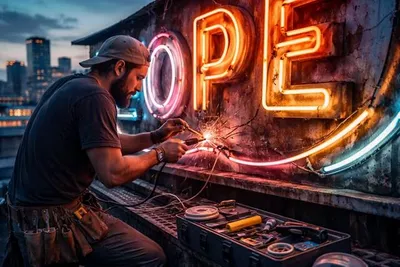
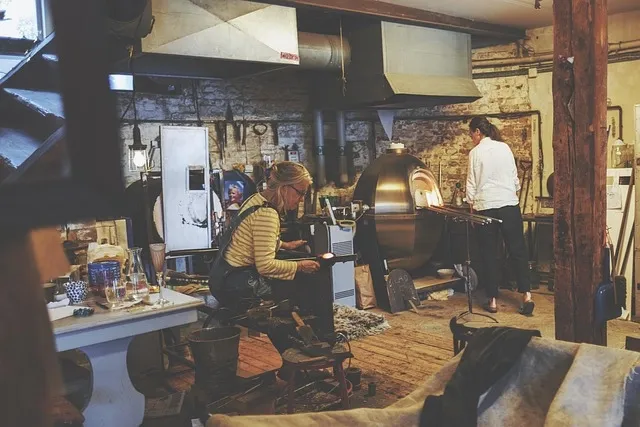
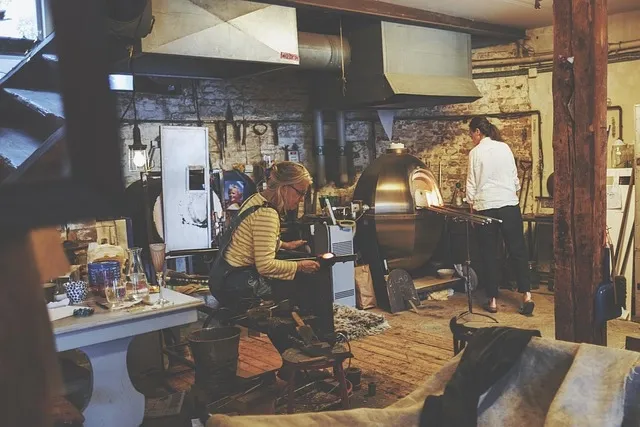
The complete process begins long before the glass is heated. A neon maker converts the design into a full-size pattern, plans the tube path and electrode positions, bends sections of hollow glass to match the pattern, adds electrodes, cleans and processes the tube, removes air, introduces the appropriate gas system, seals the tube, masks unwanted illuminated sections where necessary, then mounts and wires the finished glass.
The NIST history of luminous script signs explains the basic physical principle behind traditional neon: low-pressure gas inside glass discharge tubes emits characteristic colored light when electrically excited. That simple description hides a lot of craft skill because the glass shape, gas purity, electrodes, seals, and electrical system all have to work together.
We would not describe this as a casual DIY project. The workshop combines open-flame glass work, vacuum equipment, hazardous materials in some color systems, and high-voltage electrical testing. If the objective is simply to own a personalized sign, a custom neon sign made with LED technology is far more straightforward.
Why Is Traditional Glass Neon Sign Making So Challenging?
Traditional glass neon is difficult to make, because every stage affects the next one. A bend that is slightly distorted can change the final letter shape. A poor seal can introduce contamination. Incorrect processing can lead to dim output or early failure. Mounting can stress a tube that was perfect on the bench.
The maker is also working with materials that behave differently as temperature changes. Glass has to soften enough to bend while retaining the correct internal shape. The tube path must make visual sense from the front while leaving practical electrode and wiring positions at the back.
This is why traditional neon is considered a skilled trade rather than a craft that becomes predictable after one weekend. The physical repetition matters: experienced benders learn how different tube diameters, bend types, and glass temperatures feel in real time.
For a beginner, the most productive first step is therefore observation and supervised practice rather than trying to reproduce the entire process alone. Pattern reading, heat control, tube handling, and consistent bends are foundational skills, while gas processing and high-voltage work belong later in structured training.
Why Is Glass Neon Sign Making Considered A Skilled Craft?
Precision is the main reason. Letters have to match the pattern, curves need to remain smooth, joins and electrodes need to be positioned sensibly, and the finished piece must survive installation.
Common beginner problems include
- flattened bends,
- stretched glass,
- distorted lettering,
- contamination,
- weak seals, and designs that look correct on paper but are difficult to fabricate as continuous tubing.
There is also an artistic side. The best tube path is not always the most obvious one, especially in script lettering. A skilled maker learns where a return bend can hide, how a gap will look when illuminated, and how to preserve the character of the typeface.
What Equipment And Materials Are Needed To Make Glass Neon Signs?
For authentic glass neon, the answer is substantially more than a hand torch. A professional setup can include different burners for different bend types, a work surface and pattern system, glass tubing, electrodes, vacuum pumps, a gas manifold, gauges, electrical processing equipment, test instruments, ventilation, mounting hardware, and appropriate personal protective equipment.
The exact equipment changes with the shop and type of work. What matters is that the tools support three separate disciplines: forming the glass, creating a clean controlled environment inside the tube, and operating the finished tube safely.
| Category | Typical role |
|---|---|
| Glass-forming tools | Heat and shape tubing accurately to the full-size pattern. |
| Vacuum and gas-processing equipment | Remove air and contaminants and create the required internal gas environment. |
| Electrodes and electrical processing equipment | Provide electrical connection and prepare the tube for stable operation. |
| Testing equipment | Check continuity, illumination, electrical performance, and faults. |
| Mounting materials | Support completed tubes on a frame, panel, or building surface. |
| Safety and ventilation equipment | Control heat, fumes, electrical risk, broken glass, and hazardous materials where applicable. |
What Materials Are Used To Make Custom Neon Signs?
Traditional glass signs use hollow glass tubing, electrodes, noble gases, insulated wiring, a suitable transformer or power supply system, tube supports, and mounting hardware. Depending on the color system, the glass may be clear, colored, or coated internally with phosphor.
Pure neon gas is associated with the familiar orange-red glow. NIST documents how different gases emit characteristic colors under electrical excitation and how gas combinations extend the palette. See the NIST neon color overview.
Some argon-based phosphor systems have historically used mercury. The EPA mercury handling guidance emphasizes that mercury requires careful containment, transport, recycling, and disposal. That is one of several reasons gas processing belongs in a controlled professional environment.
Backing and support materials can include acrylic panels, painted metal, frames, stand-offs, clips, and blockout coating. By contrast, modern custom aesthetic neon signs generally achieve the glow with LED tubing and acrylic rather than gas-filled glass.
How Do You Design And Bend Glass For A Neon Sign?
The design is converted into a full-size production pattern that shows each letter, curve, tube break, electrode location, and connection. We plan the tube path before heating anything because unnecessary joins make fabrication and installation more complicated.
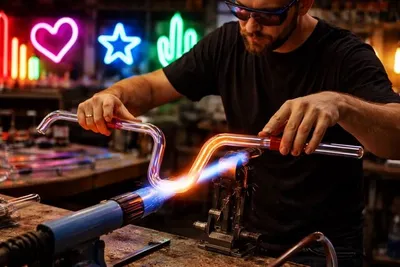
The glassworker then heats controlled sections of tubing and bends them to the pattern. Different bend shapes require different heat coverage. The goal is not just to make the tube follow the line but to preserve a consistent internal diameter and avoid twisting or flattening.
Continuous tube paths are useful where practical, but not every design should be forced into one piece. Large or complex signs are divided into manageable sections that can be processed, transported, mounted, and serviced safely.
Why Is A Neon Pattern Drawn Backward Before Bending?
Traditional neon patterns are often worked from the reverse because the fabricator is bending and assembling the tube from the back side of the finished design. Reversing the pattern helps the completed front-facing sign read correctly after mounting.
The pattern also provides alignment. It shows where tubes cross, where supports may sit, and how multiple sections meet. A good pattern removes uncertainty before hot glass is involved.
How Are Glass Neon Tubes Prepared Before Gas Filling?
After the glass shape is complete, electrodes are attached to the tube ends and the assembly is prepared for processing. The objective is to create a clean, sealed tube that can hold a controlled low-pressure gas environment over time.
Professional processing includes removing air and contaminants from the tube and electrodes before final gas filling. The traditional industry refers to part of this preparation as bombardment, where electrical processing heats components and helps drive out contamination. We are intentionally keeping this at a high level because the procedure involves specialist high-voltage equipment and should not be attempted from generalized online instructions.
Why Are Clean Tubes And Airtight Seals Essential?
Gas-discharge lighting depends on a stable internal environment. Contamination, moisture, poor electrode attachment, or leakage can change how the discharge behaves. The result can be weak illumination, inconsistent color, flicker, localized overheating, or shortened tube life.
A good seal also protects the work after installation. The sign may remain mounted for years, so tiny process defects can become long-term reliability problems rather than immediate obvious failures.
How Are Neon Tubes Evacuated, Filled, And Sealed?
Tube processing creates the internal environment that makes glass neon possible. Air is removed through a vacuum system, the tube is cleaned and conditioned through established shop procedures, and the chosen gas system is introduced at a controlled pressure before the tube is sealed.
Gas type, tube diameter, phosphor coating, cleanliness, and processing quality all influence how the finished tube behaves. Leaks or contamination can produce dimness, color instability, flicker, or premature failure.
This is not a useful stage for improvisation. Accurate gauges, known procedures, ventilation, and material controls are part of professional fabrication for a reason.
Which Gas Is Added To Produce Different Neon Colors?
Pure neon gas naturally produces a vivid orange-red light. Argon produces a different discharge, and phosphor-coated tubing can transform ultraviolet energy into many visible colors. Colored glass and coatings broaden the range further.
The palette is therefore not created by “dying the neon gas” for every color. It comes from combinations of gas discharge, phosphor, and glass. NIST’s historical displays show that different gases have distinct characteristic emissions, which is part of what made early luminous tubes scientifically interesting.
Mercury-containing color systems require particular caution. EPA identifies neon lights among lamp types that can contain mercury and recommends appropriate recycling and handling. See its lighting-system mercury guidance.
How Are Finished Glass Neon Signs Assembled And Wired?
Once the processed tubes are stable, they are mounted using supports that hold the glass away from the backing without placing damaging stress on bends or electrodes. Multiple tube sections are positioned so the design reads as one continuous image from the intended viewing angle.
The electrical system is then connected using components selected for the tube load and installation. This is another professional stage because traditional neon uses high-voltage equipment. Outdoor and commercial installations may also be subject to electrical codes, enclosure requirements, grounding, and local sign regulations.
For hospitality or branded interiors, the sign often becomes part of a wider visual system. A venue might coordinate the colors with custom cork coasters or use custom acrylic coasters for a more modern tabletop finish while preserving neon as the focal feature.
How Is A Completed Glass Neon Sign Tested Before Use?
Testing checks whether the sign illuminates consistently, whether each tube section behaves normally, whether there are obvious hot spots or flicker, and whether the wiring and mounting are safe for the intended installation. A professional also checks that supports are not stressing the glass and that the electrical components are appropriately enclosed.
A sign that lights up is not automatically ready to install. Final safety inspection matters because electrical, glass, and mounting defects may not be obvious from the front.
How Much Does It Cost To Make A Glass Neon Sign?
How much does it cost to make your own neon sign? There is no useful single figure because “make one sign” and “set up to make glass neon safely” are completely different budgets. Glass, electrodes, gases, backing, wiring, and the transformer are only the consumable side. A workshop also needs burners, vacuum and gas equipment, electrical processing equipment, ventilation, test instruments, work surfaces, and training.
That means the first authentic glass sign you make can effectively cost far more than commissioning one from an established craftsperson. Once a professional shop already exists, the price of each sign is driven mainly by size, number of tube sections, bend complexity, colors, installation requirements, and expected breakage or rework.
If budget is the priority rather than traditional craftsmanship, LED neon changes the equation. Custom logo neon signs and similar LED products avoid the gas-processing workshop and are generally easier to manufacture, ship, mount, and service.
What Factors Have The Greatest Impact On Glass Neon Sign Costs?
- Overall dimensions and total length of glass tubing.
- Number and difficulty of bends, especially tight script or detailed graphics.
- Number of separate tube sections and electrode pairs.
- Color system, glass type, and coating requirements.
- Custom metalwork, backing, paint, and structural fabrication.
- Transformer, electrical enclosure, installation, and permitting needs.
- Repair or replacement of glass broken during fabrication, transport, or installation.
Frequently Asked Questions About ''How To Make Glass Neon Signs''
How Are Traditional Glass Neon Signs Made?
Traditional neon signs are made by designing a full-size pattern, heating and bending hollow glass tubing, attaching electrodes, professionally cleaning and processing the tubes, creating a vacuum, filling them with the appropriate gas system, sealing them, mounting the glass, wiring the electrical components, and testing the finished sign.
Why Does Glass Neon Sign Making Require Specialized Skills?
The work combines precision glass bending, vacuum and gas processing, hazardous-material controls in some systems, high-voltage electrical work, and fragile installation. Small errors can affect appearance, reliability, or safety, so consistent results require training and professional equipment.