How Do Led Signs Work And Turn Electricity Into Digital Images?
LED signs work by combining thousands of light-emitting diodes, electronic controls, power supplies, and rapid digital switching to turn electrical signals into visible text, graphics, animation, and video. This guide explains how LEDs produce light, how pixels form images, how controllers manage content, and how power, resolution, refresh rate, and display technology affect performance.

Key Takeaways
- LED signs use grids of light-emitting diodes that can be switched and dimmed electronically to display text, graphics, animation, and video.
- A controller converts digital content into instructions for individual pixels or modules, while receiving cards synchronize sections of larger displays.
- Image quality depends heavily on pixel pitch, resolution, viewing distance, brightness, and refresh rate rather than on screen size alone.
- LED displays are available in indoor, outdoor, monochrome, full-color, transparent, and flexible formats, with different designs suited to different environments.
Table of contents
-
How Do Led Signs Work?
-
What Is An Led Sign And How Does It Produce Light?
-
What Are The Main Components Of An Led Sign?
-
How Do Pixels Create Images On An Led Sign?
-
How Do Led Signs Display Smooth Motion And Animation?
-
How Are Led Signs Powered And Connected?
-
What Types Of Led Display Technologies Are Available?
-
How Do Led Signs Compare With Other Display Technologies?
How Do Led Signs Work?
An LED sign works by arranging many tiny light-emitting diodes into a controlled grid. Each diode acts as a small light source. In a simple monochrome sign, groups of LEDs may switch on and off to form letters or numbers. In a full-color display, red, green, and blue LED elements are combined into pixels that can reproduce a much wider range of colors.
Electrical signals determine which LEDs illuminate, how bright they appear, and how long they remain active during each refresh cycle. The sign does not create one permanent picture inside the panel. Instead, its electronics repeatedly update the state of the pixels so quickly that the viewer sees stable text, a still image, scrolling content, or smooth motion.
Most display modules operate on low-voltage direct current supplied by internal power-conversion equipment. Unlike traditional glass neon, an LED display does not need a gas discharge, hot filament, or fragile glass tube to create light. The visible result comes from semiconductor devices converting electrical energy directly into light at thousands or millions of controlled points.
What Happens From The Moment Content Is Sent To The Sign?
Imagine a shop manager creates a promotion on a computer and sends it to a storefront LED screen. The content software first converts the message, image, or video into a format the display controller can process. The controller then maps that content to the screen’s pixel layout and sends timed instructions through the sign’s communication network.
On a larger display, receiving cards distribute those instructions to individual LED modules. The modules repeat the commanded brightness and color values many times per second. If the message is meant to scroll, the controller changes the pixel pattern slightly from one frame to the next. The rapid sequence creates the visual impression of continuous movement rather than a series of separate updates.
What Is An Led Sign And How Does It Produce Light?
An LED sign is an illuminated display that uses light-emitting diodes as its primary light source. The same basic semiconductor principle appears in indicator lights, lamps, screens, and custom LED signs. What changes is how many diodes are used, how they are arranged, and how precisely the electronics control them.
LED stands for light-emitting diode. A diode is a semiconductor component designed to allow current to flow in a controlled direction. In an LED, electrical energy causes charge carriers to recombine within semiconductor material and release energy as photons. This process is called electroluminescence. The semiconductor composition determines the basic wavelength, and therefore the color, produced by the device.
Incandescent lamps make light by heating a filament. LEDs use semiconductor electroluminescence instead, so they can produce useful light without relying on a white-hot wire.
How Is Led Brightness Controlled?
Brightness is controlled by regulating the electrical current supplied to an LED and, in many displays, by pulse-width modulation. With pulse-width modulation, an LED is switched on and off rapidly. Changing the proportion of each cycle during which it remains on changes the perceived brightness without requiring the viewer to see the individual switching events.
Outdoor signs may also use light sensors and automatic brightness settings. During bright daylight, the display can increase output so content remains legible. At night, reducing brightness improves comfort, limits glare, and reduces unnecessary power use. Manual schedules can provide similar control when ambient-light sensors are not used.
LEDs are efficient, but consumption still changes with brightness and content. Manufacturers therefore publish maximum and typical power figures rather than one fixed value for every use.
What Are The Main Components Of An Led Sign?
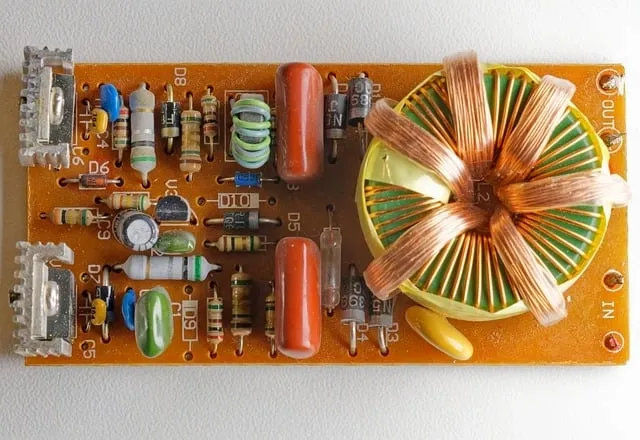
A digital LED sign is a system rather than a sheet of lights. The visible face is built from LED modules or panels, while the cabinet protects and supports the electronics. Power supplies convert incoming electrical power to the voltage required by the modules. A controller interprets the content, receiving cards distribute instructions, and communication hardware connects the sign to a computer, media player, network, or cloud platform.
| Component | Main role |
|---|---|
| LED modules | Hold the diodes or pixels that create the visible image. |
| Cabinet or frame | Supports the modules and protects power and control electronics. |
| Power supplies | Convert incoming power to regulated low-voltage DC for the display. |
| Controller | Processes content and determines what each part of the display should show. |
| Receiving cards | Distribute synchronized image data to modules in larger displays. |
| Communication system | Transfers content through Ethernet, Wi-Fi, cellular, or another supported connection. |
How Do Led Sign Controllers Manage Display Content?
The controller is the sign’s traffic manager. It receives files or live data, scales and maps the content to the correct screen dimensions, and generates the timing information needed to refresh the display. Some systems play stored schedules independently, while others operate synchronously with a computer or video source.
Remote management makes frequent updates practical. A business can change promotions, menus, opening information, or event messages without physically opening the cabinet. For permanent brand graphics rather than a pixel screen, a custom logo neon sign offers a different LED-based approach with a fixed illuminated design.
How Do Pixels Create Images On An Led Sign?
A pixel is the smallest picture element the display controls as a visual unit. In a full-color LED screen, each pixel typically includes red, green, and blue light sources. By changing the intensity of those three primary colors, the display uses additive color mixing to produce many visible colors, including white when the channels are balanced at high output.
Resolution describes how many pixels the display has horizontally and vertically. More pixels provide more detail, but only when the content, controller, physical size, and viewing distance make use of that extra resolution. A small sign displaying simple text may not need the same density as a close-view indoor video wall.
How Do Pixel Pitch And Resolution Affect Image Quality?
Pixel pitch is the center-to-center distance between neighboring pixels, usually expressed in millimeters. A finer pitch places pixels closer together and increases pixel density for a given physical area. This supports more detailed images and closer viewing, but it usually increases cost, processing requirements, and the number of components in the display.
How Do Led Signs Display Smooth Motion And Animation?
Motion appears smooth because the display shows a sequence of frames while refreshing the LEDs much more frequently. Frame rate describes how many distinct video frames are presented each second. Refresh rate describes how often the display hardware updates or drives the pixels. The two measurements are related to visual performance but are not interchangeable.
Scrolling text is a simple example. The controller moves the letter pattern a few pixels between frames, and the screen refreshes those changing patterns fast enough for the eye to perceive motion. Video works on the same broad principle, although it requires far more data because every frame can contain different color and brightness values across the entire screen.
How Does Refresh Rate Improve Led Display Performance?
A sufficiently high refresh rate reduces visible flicker and helps moving content look stable. It is particularly important when an LED display will be photographed or filmed. A screen that looks normal to the eye can show dark bands, partial frames, or flicker on camera when its refresh behavior interacts poorly with shutter speed and frame rate.
How Are Led Signs Powered And Connected?
Most permanently installed LED signs connect to mains electricity and use internal power supplies to create the regulated low-voltage DC needed by the modules and control electronics. Electrical design has to account for total load, circuit protection, grounding, cable sizing, heat, ventilation, and the environment in which the sign will operate.
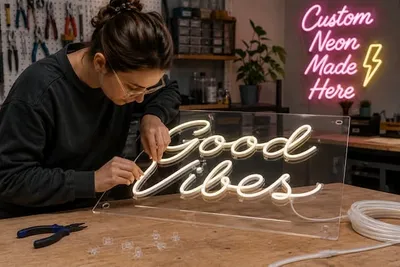
Smaller decorative signs may use an external adapter or USB-style supply, and some products are designed for portable power. A custom plug-in neon sign is an example of a fixed illuminated design intended to connect through a standard power source rather than function as a pixel-based video display. Battery and solar systems are also possible for specific applications, but their energy storage and charging capacity must match the expected operating time.
Connectivity depends on how often content changes and how the sign is managed. Ethernet provides a common wired option, while Wi-Fi, cellular connections, local media players, and dedicated control networks are used in different installations. Remote access should be configured securely because a network-connected sign is also a networked device.
How Much Electricity Do Led Signs Use?
There is no single wattage for all LED signs. Power consumption depends on screen area, pixel density, LED efficiency, brightness setting, content, power-supply efficiency, and operating schedule. A manufacturer’s maximum rating represents a worst-case design figure, while normal use may be lower because not every pixel is driven at maximum output continuously.
What Types Of Led Display Technologies Are Available?
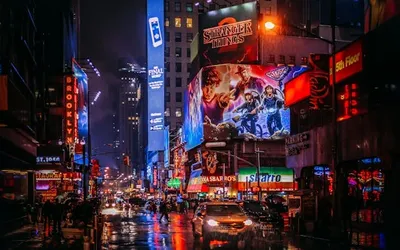
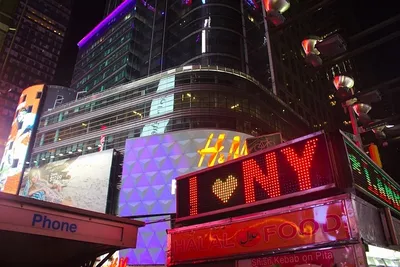
LED signage ranges from simple single-color message boards to high-resolution full-color video walls. Indoor displays usually prioritize close viewing, fine pixel pitch, and controlled brightness. Outdoor displays emphasize weather protection and strong daylight visibility. Transparent LED products preserve some sightline through a window or structure, while flexible modules can follow curves or unusual architectural forms.
Two common packaging approaches are SMD and DIP. SMD, or surface-mounted device, packages compact LED elements on the face of a circuit board and supports fine pixel density and broad viewing angles. DIP, or dual in-line package, uses individual through-hole LED components and has traditionally been valued for robust outdoor brightness and durability in suitable applications.
The best technology depends on the application, not on one specification. A close-view retail wall, roadside message board, stage screen, menu display, and custom aesthetic neon sign solve different visual problems even though all use LEDs somewhere in the system.
What Is The Difference Between Smd And Dip Led Displays?
SMD technology usually allows red, green, and blue elements to be packaged very closely, supporting finer pitches and smooth color blending. It is common in modern indoor displays and many outdoor products. DIP separates the color components into more visibly distinct lamps, which can limit very fine density but can provide strong direct brightness and physical robustness.
How Do Led Signs Compare With Other Display Technologies?
Direct-view LED creates the image with the LEDs themselves, so there is no separate LCD panel or backlight in front of the light source. LCD displays use liquid crystals to modulate a backlight. OLED uses self-emissive organic pixels. Mini-LED generally refers to very small LEDs used mainly for backlighting, while microLED aims to use microscopic inorganic LEDs as individual display pixels.
For signage, direct-view LED is attractive because it can scale to very large dimensions, reach high brightness, use modular cabinets, and remain visible at long distances. Its trade-offs include pixel structure at close range, potentially higher upfront cost, significant power demand on large installations, and the need for access to modules, power supplies, and control electronics during maintenance.
Why Do Businesses Choose Led Signs Over Traditional Displays?
The strongest business advantage is changeability. One display can show opening information in the morning, promotions later in the day, event messages in the evening, and emergency or directional information when required. Scheduled content reduces the need to print and physically replace a new sign every time the message changes.
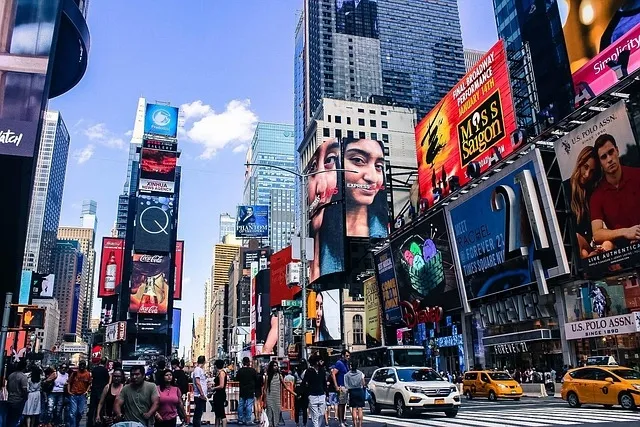
LED signs are widely used for advertising, menus, scoreboards, transport information, wayfinding, retail promotions, event screens, and public information. Their modular construction also allows very large formats that would be impractical with a single conventional monitor. Outdoor products can be engineered for daylight visibility and environmental protection.
The best long-term result depends on matching the technology to the message. A business that needs frequently changing offers may benefit from a programmable display, while a brand that wants one permanent illuminated logo may be better served by a simpler fixed LED design. Installation cost, content workflow, viewing distance, service access, and operating hours should all influence the decision.
Frequently Asked Questions About ''How Do Led Signs Work''?
How Do Led Signs Function?
LED signs function by using electronic controllers to switch and dim many light-emitting diodes in a coordinated grid. The controller translates text, images, or video into pixel instructions, receiving cards distribute those instructions across the display, and the LEDs refresh rapidly enough to create a stable image or smooth motion.
What Is An Led Sign And How Does It Generate Light?
An LED sign is an illuminated display built around light-emitting diodes. Each LED produces light through electroluminescence in semiconductor material when current flows through the device. In full-color displays, red, green, and blue elements combine at different brightness levels to create the colors visible in each pixel.